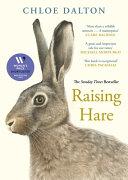
Raising Hare
Raising Hare by Chloe Dalton is one of 2026's most credible books, appearing on 2 of the year's most respected lists, including The Economist, The Wall Street Journal, for a Consensus Score of 35 out of 100.
Appears on these lists
Our take
AI-draftedDalton, a foreign policy adviser, structures this memoir around a single practical problem—what to do with an abandoned newborn hare she found on a country lane—and lets the year of feeding, observing, and eventually not caging the animal become an argument for a specific kind of attention. The book's most distinctive move is refusing the usual redemption arc of nature memoirs: the hare is never tamed, never named as a pet substitute for human connection, and the relationship's value lies precisely in how much of the animal's behavior remains illegible to her. The prose stays close to observed detail—how a leveret moves, freezes, chooses to stay or leave—rather than reaching for larger metaphor, which is what keeps the book from tipping into sentimentality.
In the press
“A soulful and gracefully written book about an animal's power to rekindle curiosity.”
Kirkus Reviews
How the Consensus Score is calculated
Our Consensus Score is our own transparent editorial metric — not a user rating. It weighs each list by the credibility of its source, how recent the listing is, and any award status. Here is the full breakdown.
| Source | Authority | Recency | Award | Contribution |
|---|---|---|---|---|
| The Economist | 0.95 | 0.85 | 1.00× | 0.81 |
| The Wall Street Journal | 0.92 | 0.85 | 1.00× | 0.78 |
| Weighted sum → Score | 1.59 → 35 | |||
Similar consensus books
Because they appear on some of the same lists.
Frequently asked
What lists is Raising Hare on?
Raising Hare appears on 2 lists in our 2026 corpus, including The Economist, The Wall Street Journal.
What is its Consensus Score?
Raising Hare has a Consensus Score of 35 out of 100, our transparent editorial measure of how many credible lists agree on it.