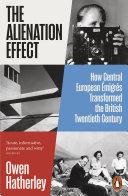
The Alienation Effect
The Alienation Effect by Owen Hatherley is one of 2026's most credible books, appearing on 1 of the year's most respected lists, including The Guardian, for a Consensus Score of 16 out of 100.
Appears on these lists
Our take
AI-draftedHatherley's history follows the émigrés Britain treated as suspect aliens — Bauhaus exiles, Ernst Gombrich, Nikolaus Pevsner, Arthur Koestler, architects Ernő Goldfinger and Berthold Lubetkin — and traces their disproportionate remaking of British visual and intellectual culture from the 1930s through the 1980s. His argument runs against the grain of nostalgic national-culture narratives: postwar Britain's architecture, art criticism, and design sensibility were substantially the work of people the state itself had interned or mistrusted. What reviewers keep flagging is the density of specific case studies — Hatherley moves fast through individual careers and institutions rather than offering a single unifying thesis.
In the press
“The Alienation Effect reveals just how tightly the foreign is woven into the fabric of the familiar”
Anna Parker, Times Literary Supplement
How the Consensus Score is calculated
Our Consensus Score is our own transparent editorial metric — not a user rating. It weighs each list by the credibility of its source, how recent the listing is, and any award status. Here is the full breakdown.
| Source | Authority | Recency | Award | Contribution |
|---|---|---|---|---|
| The Guardian | 0.85 | 0.85 | 1.00× | 0.72 |
| Weighted sum → Score | 0.72 → 16 | |||
Similar consensus books
Because they appear on some of the same lists.
Frequently asked
What lists is The Alienation Effect on?
The Alienation Effect appears on 1 list in our 2026 corpus, including The Guardian.
What is its Consensus Score?
The Alienation Effect has a Consensus Score of 16 out of 100, our transparent editorial measure of how many credible lists agree on it.