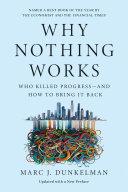
Why Nothing Works
Why Nothing Works by Marc J. Dunkelman is one of 2026's most credible books, appearing on 2 of the year's most respected lists, including The Economist, McKinsey & Company, for a Consensus Score of 33 out of 100.
Appears on these lists
Our take
AI-draftedDunkelman's argument is that American progressivism swung from a Hamiltonian faith in centralized power to a Jeffersonian suspicion of it, and that the second impulse — procedural safeguards, community review, veto points meant to check abuse — is now the main reason infrastructure and housing projects stall for decades. The historical tour through this pendulum is genuinely detailed, tracing how reforms meant to protect against corruption calcified into general-purpose obstruction. The weak point is the prescription: having diagnosed a problem of diffused authority, Dunkelman is notably vague about which decisions should be recentralized and who should make them, leaving the book stronger as autopsy than as blueprint.
In the press
“Provocative reading for anyone with a stake in public works writ large”
Kirkus Reviews
How the Consensus Score is calculated
Our Consensus Score is our own transparent editorial metric — not a user rating. It weighs each list by the credibility of its source, how recent the listing is, and any award status. Here is the full breakdown.
| Source | Authority | Recency | Award | Contribution |
|---|---|---|---|---|
| The Economist | 0.95 | 0.85 | 1.00× | 0.81 |
| McKinsey & Company | 0.80 | 0.85 | 1.00× | 0.68 |
| Weighted sum → Score | 1.49 → 33 | |||
Similar consensus books
Because they appear on some of the same lists.

Frequently asked
What lists is Why Nothing Works on?
Why Nothing Works appears on 2 lists in our 2026 corpus, including The Economist, McKinsey & Company.
What is its Consensus Score?
Why Nothing Works has a Consensus Score of 33 out of 100, our transparent editorial measure of how many credible lists agree on it.